
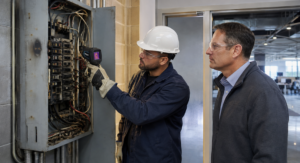
Reliable electricity is one of the foundations of a successful business. Computers, manufacturing equipment, refrigeration systems, lighting, security devices, communication networks, and climate-control systems all depend on a stable electrical supply. When a circuit breaker begins to fail, the warning signs may appear minor at first, but the underlying problem can eventually interrupt operations, damage valuable equipment, or create a serious safety hazard.
A circuit breaker is designed to interrupt electrical current when it detects an overload, short circuit, or another unsafe condition. By stopping the flow of electricity, the breaker helps protect wiring, equipment, and buildings from excessive heat and electrical fires. Like other mechanical and electrical components, however, breakers can deteriorate over time.
Businesses often add equipment, remodel workspaces, expand production, or increase their reliance on technology without examining whether the existing electrical system can support the additional demand. Recent reporting from Reuters has also highlighted how power disruptions can affect hundreds of thousands of homes and businesses at once. Although a company cannot control the regional power grid, it can maintain the electrical protection equipment located inside its own facility.
Recognizing the following seven warning signs can help business owners address a deteriorating circuit breaker before it causes a costly shutdown.
1. Circuit Breakers Trip Repeatedly
An occasional trip may occur when too many electrical devices operate on the same circuit. Frequent trips point to a more serious condition. The circuit may be overloaded, a connected device may be malfunctioning, the wiring may contain a fault, or the breaker itself may no longer operate correctly.
Repeatedly resetting a breaker without identifying the cause does not solve the problem. A breaker that continues to trip is responding to an electrical condition that requires attention. Employees should never be instructed to keep resetting it as part of their daily routine.
The situation deserves particular attention when business operations have changed. A restaurant may have installed new cooking equipment, a warehouse may have added charging stations, or an office may have expanded its server room. Each change can increase the electrical load placed on existing circuits.
An inspection by a qualified electrician can determine whether the breaker is defective or whether the circuit needs to be redesigned. Replacing the breaker alone will not correct overloaded wiring, so the entire circuit should be evaluated before work begins.
2. The Breaker or Electrical Panel Feels Unusually Hot
Circuit breakers can become slightly warm during normal operation, but excessive heat is a warning sign. A hot breaker, panel cover, or area surrounding the electrical equipment may indicate an overloaded circuit, a loose connection, damaged wiring, or internal breaker failure.
Electrical resistance at a loose connection generates heat. If that heat continues to build, it can damage insulation, surrounding components, and the electrical panel itself. The risk becomes more serious in commercial buildings where equipment operates for long periods or circuits carry substantial loads.
The growing importance of modern power protection has received attention in the business press. Forbes has reported on advancements in digital circuit-breaker technology designed to provide faster interruption and improved electrical safety.
Employees should not remove a panel cover or touch internal components to investigate excessive heat. A licensed electrical professional has the training and testing equipment needed to inspect the panel safely. Prompt attention can prevent a localized heat problem from damaging other breakers or disrupting a larger portion of the building.
3. Burning Odors or Scorch Marks Appear Near the Panel
A burning odor near an electrical panel requires immediate attention. The smell may come from overheating insulation, a loose connection, a damaged breaker, or another component that has begun to deteriorate. Brown discoloration, black marks, melted plastic, or visible charring provide additional evidence of excessive heat or arcing.
Businesses should treat these signs as an urgent safety issue. Electrical equipment may continue operating even while heat is damaging components behind the panel cover. Waiting until the breaker stops functioning can allow the problem to spread.
The effect of electrical instability extends far beyond a single device. The Wall Street Journal has documented the increasing pressure that expanding technology and industrial demand place on electrical infrastructure. Inside an individual business, growing equipment loads can create similar pressure when electrical systems have not been evaluated or upgraded.
When a burning odor, smoke, or scorching is present, personnel should follow the company’s emergency procedures and contact a qualified professional. If active smoke or fire is visible, the building should be evacuated and emergency services contacted. Electrical panels should never be opened or sprayed with water.
4. Lights Flicker When Business Equipment Starts
Flickering or dimming lights can reveal voltage fluctuations within a building. A brief, minor change may occur when a large motor starts, but regular or pronounced flickering can indicate overloaded circuits, loose connections, inadequate electrical capacity, or a deteriorating breaker.
The pattern often becomes noticeable when high-demand equipment turns on. Air compressors, commercial refrigerators, heating and cooling equipment, industrial machinery, elevators, and large printers can all place substantial demand on the electrical system.
Voltage instability may also affect sensitive electronics. Computers, network equipment, point-of-sale systems, security devices, and automated controls can experience premature wear, unexpected restarts, corrupted data, or component failure when supplied with inconsistent power.
The Associated Press has carried business coverage emphasizing the importance of electrical-system assessments and power readiness for operations that depend on continuous uptime. For an individual company, investigating flickering lights is a practical part of protecting equipment and maintaining business continuity.
An electrician can test voltage levels, examine connections, measure circuit loads, and determine whether a breaker or another part of the electrical system requires replacement.
5. The Breaker Will Not Stay Reset
A breaker that immediately trips after being reset may be responding to a short circuit, ground fault, severe overload, damaged appliance, or wiring problem. A breaker that feels loose, fails to click firmly into position, or remains off despite being moved into the correct position may have suffered internal mechanical damage.
Employees should not force the breaker into place, tape the handle in the on position, or attempt to prevent it from tripping. The breaker’s ability to disconnect power is a critical safety function. Defeating that function can expose the circuit to dangerous levels of current.
Businesses that encounter this problem should disconnect affected equipment when it is safe to do so and arrange for professional testing. Forcing a defective breaker to remain energized can turn a manageable repair into equipment loss, wiring damage, or an electrical fire.
Business owners searching for dependable replacement options can review Circuit Breakers Replacement Near Me to learn more about sourcing appropriate replacement breakers. The new breaker must match the panel, electrical specifications, interrupting rating, and intended application. Physical fit alone does not establish compatibility.
6. The Electrical Panel Makes Buzzing or Crackling Sounds
A healthy electrical panel generally operates quietly. Buzzing, crackling, sizzling, popping, or snapping sounds can indicate electrical arcing, loose connections, overloaded components, damaged wiring, or a breaker that is failing internally.
A faint hum from certain electrical equipment may be normal, but a new or increasingly loud sound should be investigated. Crackling and popping deserve especially prompt attention because they may signal current jumping across a damaged connection.
Arcing generates intense heat and can damage nearby materials. It may also occur intermittently, which means the sound can disappear before an electrician arrives. Employees should document when the noise occurred, which equipment was operating, and whether lights flickered or odors were present at the same time.
Power reliability has become a prominent business concern as energy demand grows. Coverage from CNBC has examined the substantial electrical demand associated with data centers and other technology-intensive operations. The same principle applies on a smaller scale inside commercial properties. Higher demand requires correctly sized, properly maintained electrical protection.
Unusual panel sounds should never be investigated by placing an ear or hand close to energized equipment. The area should remain clear until a licensed professional can conduct a safe inspection.
7. The Breakers Are Old, Obsolete, Damaged, or Difficult to Replace
Circuit breakers do not have an unlimited service life. Age, repeated tripping, heat, moisture, corrosion, dust, vibration, and heavy usage can gradually affect their reliability. Older breakers may also be obsolete, making exact replacements more difficult to locate.
Visible rust, cracked housings, broken handles, faded labels, or signs of previous overheating indicate that an electrical panel deserves professional evaluation. A lack of maintenance records is another reason to arrange an inspection, especially after purchasing or leasing an older commercial property.
Obsolete equipment can create operational challenges even before it fails. If a replacement cannot be located quickly, a business may remain partially shut down while the correct component is sourced. Maintaining records of panel manufacturers, breaker model numbers, amperage ratings, and previous repairs can shorten the response time during an electrical emergency.
U.S. Chamber of Commerce guidance on business continuity emphasizes preparation for events that can interrupt operations. Electrical-system maintenance belongs in that preparation. A planned inspection or scheduled replacement is usually easier to manage than an unexpected failure during the busiest part of the business day.
Replacement decisions should be based on the condition of the equipment, test results, manufacturer requirements, and the demands placed on the system. In some cases, replacing an individual breaker is appropriate. In others, extensive deterioration, obsolete components, or increased electrical demand may justify a broader panel upgrade.
Circuit Breaker Replacement Supports Business Continuity
Circuit breaker maintenance is more than a building issue. It affects employee safety, equipment protection, customer service, productivity, and a company’s ability to continue operating. A single defective component can interrupt computers, production lines, payment systems, refrigeration, security equipment, or communication networks.
Businesses should keep electrical panels accessible, clearly labeled, and free from stored materials. Employees should know how to report unusual odors, sounds, heat, flickering lights, and repeated breaker trips. Maintenance records should document inspections, repairs, equipment additions, and circuit changes.
Electrical work should always be performed by qualified professionals. Commercial systems can involve complex loads, higher voltages, specialized equipment, and code requirements that demand proper training. A professional assessment can distinguish between a failed breaker and a deeper problem involving wiring, load distribution, connections, or panel capacity.
Conclusion
Circuit breakers provide an essential layer of protection between a business and dangerous electrical faults. Frequent trips, excessive heat, burning odors, flickering lights, failed resets, unusual sounds, and aging equipment are all signs that the electrical system needs professional attention.
Addressing these warnings early can help a business avoid damaged equipment, lost work, canceled orders, disrupted customer service, and preventable safety hazards. Regular inspections and timely circuit breaker replacement also allow electrical maintenance to be scheduled around business operations instead of being forced by an emergency.
A dependable electrical system supports every department that relies on lighting, machinery, computers, refrigeration, communications, and security. Paying attention to the condition of circuit breakers is a practical investment in safety, reliability, and long-term business continuity.